
Features
Clinical History
A 54-year-old man presented to hospital with 12 hours of severe colicky pain, nausea and vomiting. On history, he was noted to have had a 3-year history of intermittent right subcostal pain for which he had not seen a doctor. He was diagnosed as having an acute bowel obstruction and a laparotomy was performed.
Pathology
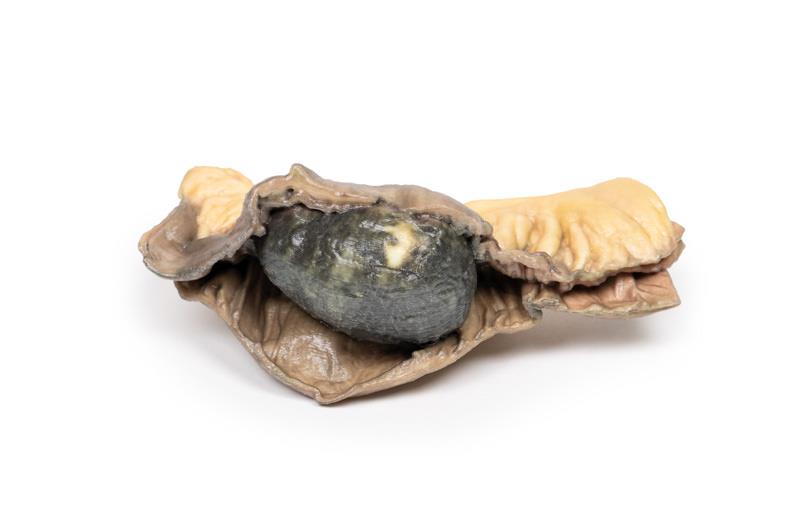
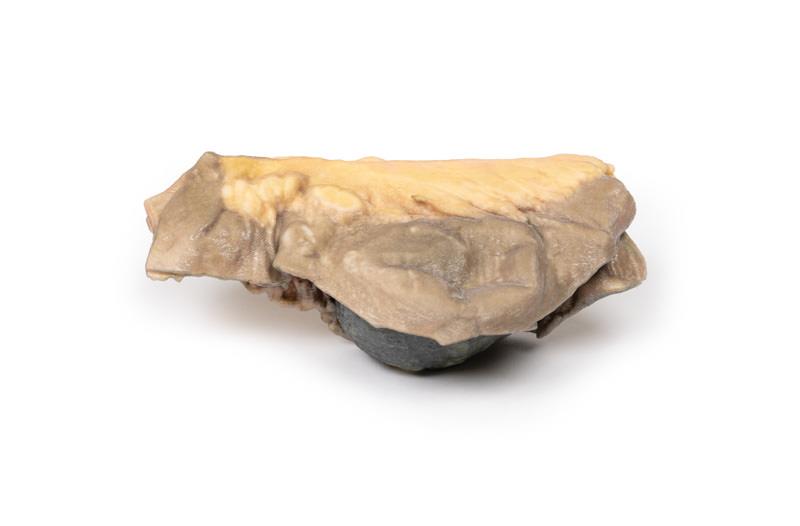
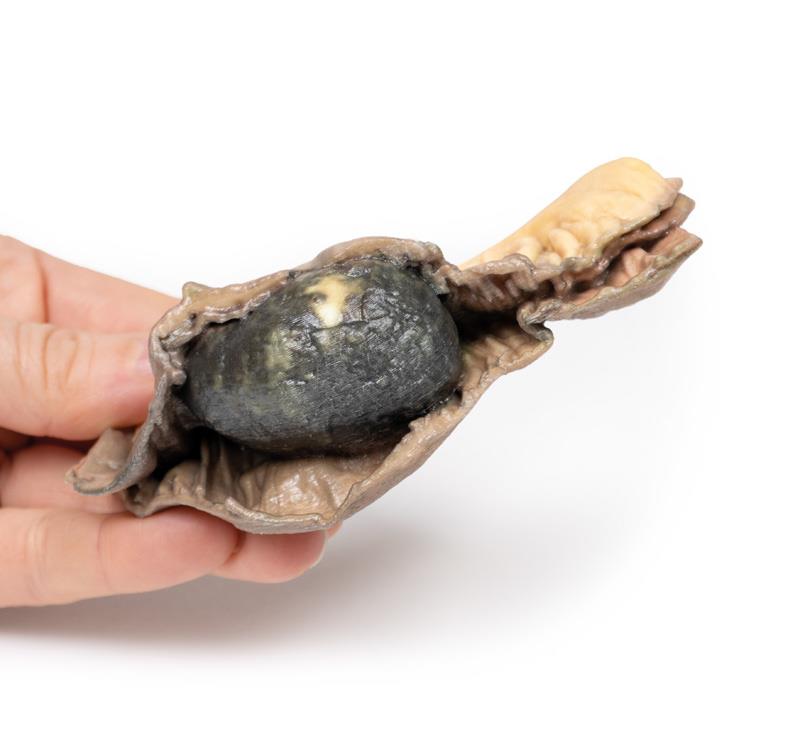
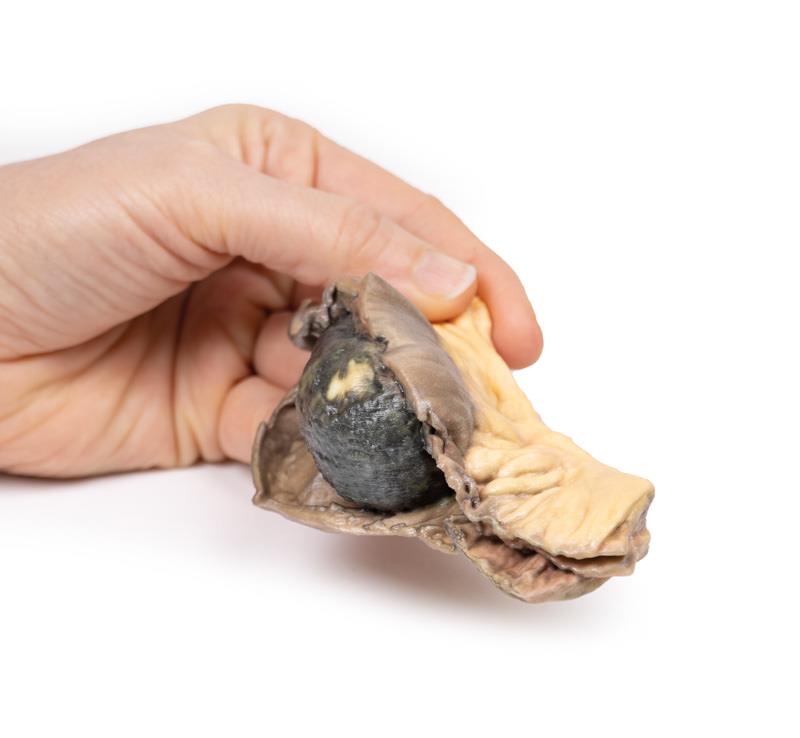
This segment of small bowel has been opened to display a large pigmented, ovoid gall stone with a roughened surface. This is an example of gall stone ileus.
Further Information
Gallstone disease is an uncommon cause of bowel obstruction – accounting for only 0.5% of cases with a preponderance for older and female patients. It most commonly secondary to biliary-enteric fistulae (can be to proximal or distal portions of bowel) but can also occur after sphincterotomy. Stones are usually over 2-2.5cm and 70% impact in the ileum, while others obstruct at sites of stricture/narrowing. History may include episodic obstructive symptoms. Diagnosis is confirmed either radiologically (often on CT scan) or at time of removal. Rigler’s triad is typical for gallstone ileus and consists of: (1) small bowel obstruction, (2) a gallstone outside the gallbladder, and (3) air in the bile ducts (pneumobilia) seen on imaging and gallstone presence on plane XR. Treatment usually surgical with removal of the obstructing stone, closure of the fistula and cholecystectomy to stop recurrence. These procedures may need to be staged.