

Features
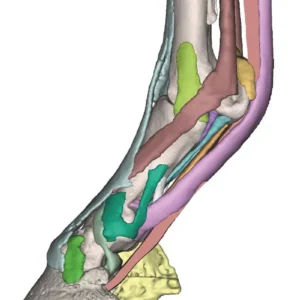
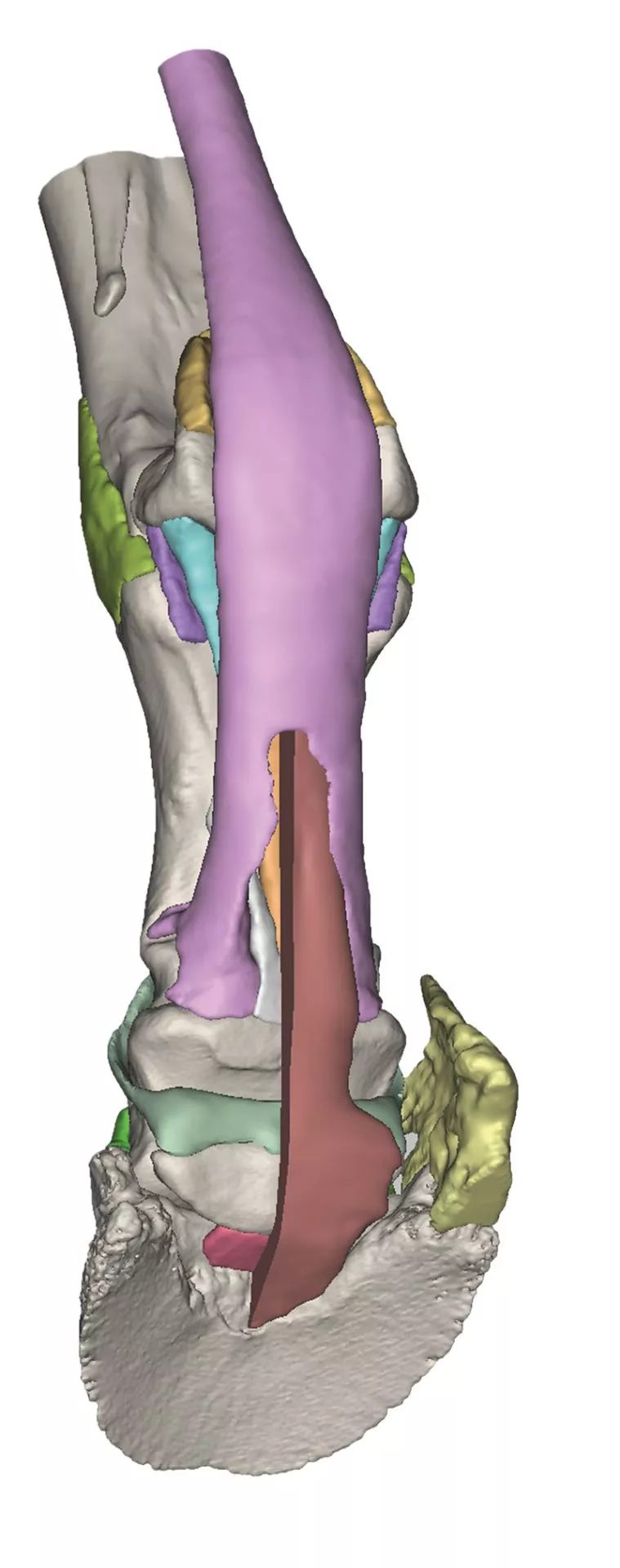
The Foot of a horse as model – Model 3 is a lifesize, anatomically precise 3D model created for veterinary professionals, educators, and students. It highlights crucial relationships between tendons, bones, and ligaments of the equine foot. Choose this model to gain a comprehensive and vivid understanding of complex hoof anatomy that standard diagrams or generic replicas simply cannot provide.
Reveal In-Depth Equine Foot Anatomy with Foot of a horse as model – Model 3
This advanced model brings veterinary and educational training to the next level with unparalleled anatomical accuracy. The Foot of a horse as model – Model 3 uses co-registered CT and MR data to 3D print each structure in true-to-life color. See the deep digital flexor tendon sectioned to expose its precise connection to the distal sesamoid bone and impar ligament. One ungular cartilage is removed, making the collateral ligaments of the distal sesamoid bone easily visible. Individual color coding helps users distinguish every anatomical component. Rely on this clinical-grade resource for detailed case discussions, demonstration, and study, especially when examining structures beneath the surface not visible in traditional models.
Features and Benefits
- Lifesize and anatomically accurate design
- Derived from combined CT and MR scans for maximum precision
- 3D printed in full color with individually colored anatomical components
- Sectioned deep digital flexor tendon to illustrate detailed anatomical relationships
- One ungular cartilage absent to view collateral ligaments fully
- Hoof capsule available separately to anchor the model in stance position
- Part of a four-model series for stepwise anatomical exploration
- Clinical-grade quality ideal for education and demonstration
Indications for Use
- Veterinary anatomy teaching
- Clinical demonstration and case review
- Student learning and examination preparation
- Surgical and diagnostic planning in equine practice
Size Guide
- Lifesize model representing an average adult horse foot
- Accurately proportioned anatomical structures based on actual equine imaging data