

Features
The Horse sagittal half-head is a clinical-grade anatomical model designed for veterinary professionals and educators. It provides a detailed, hands-on view of equine head anatomy, supporting in-depth teaching, demonstrations, and study. Choose this model for its precise dissection features and superior educational value over generic alternatives.
Reveal Equine Anatomy in Unmatched Detail with the Horse sagittal half-head
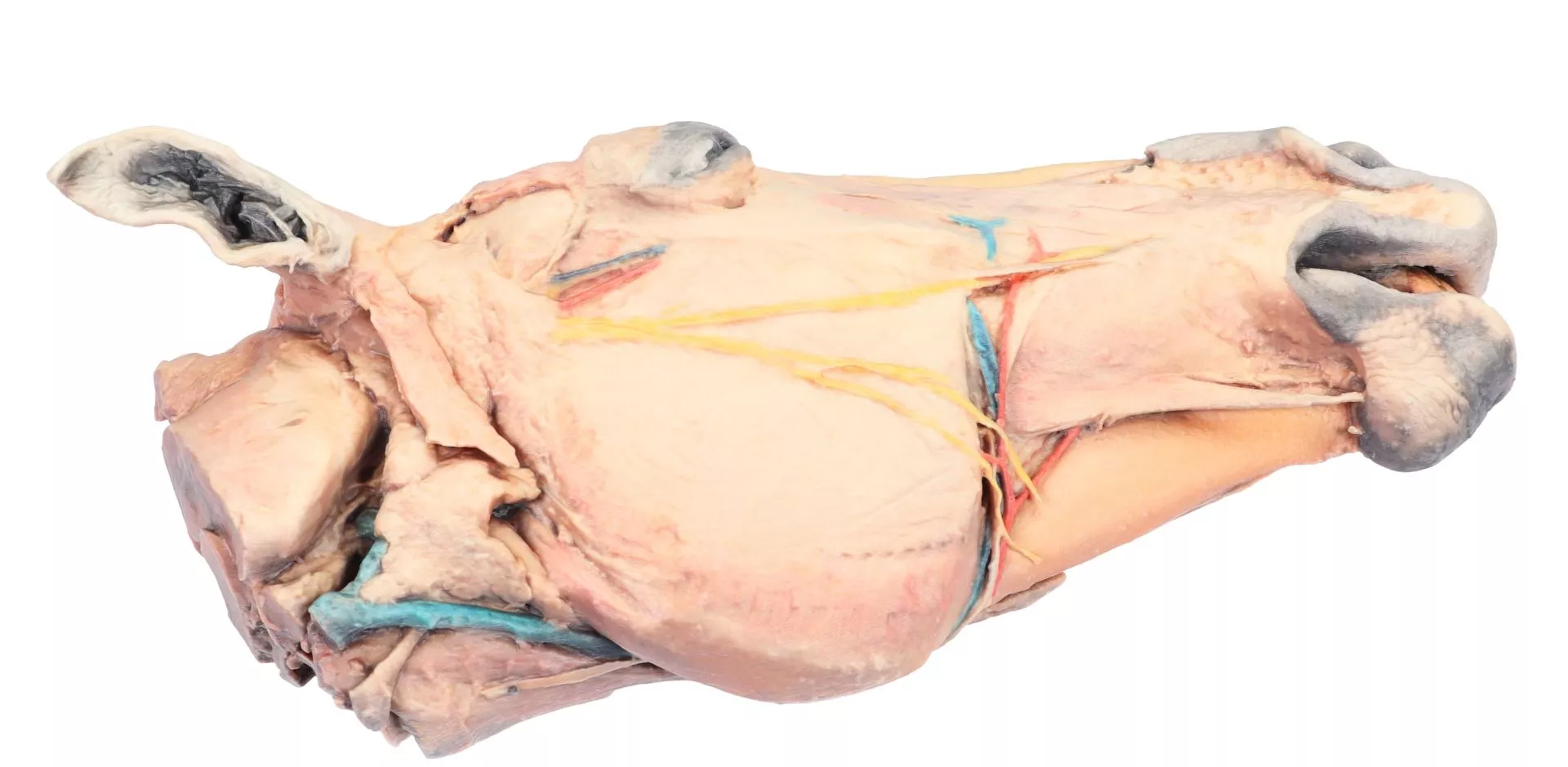
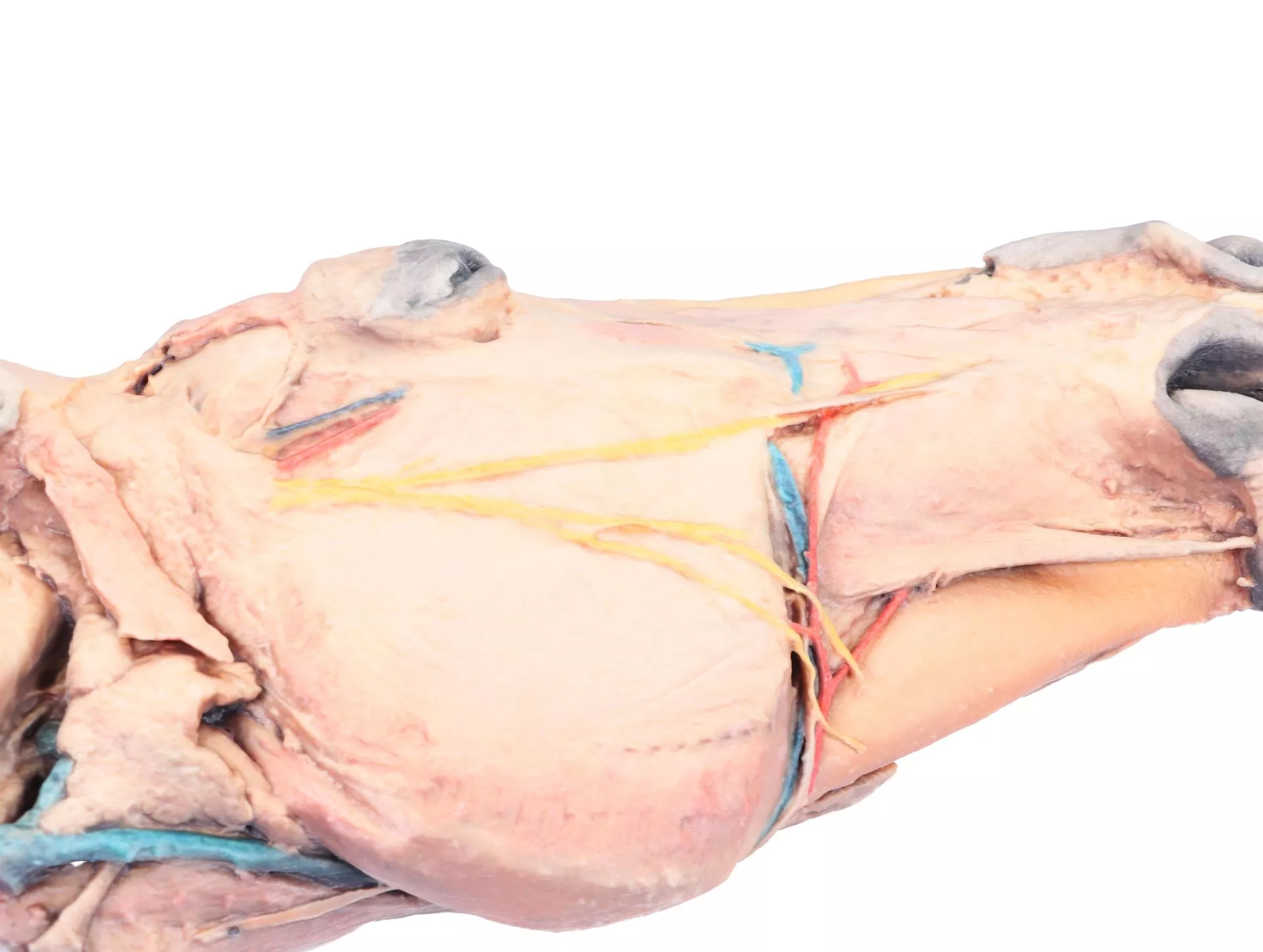
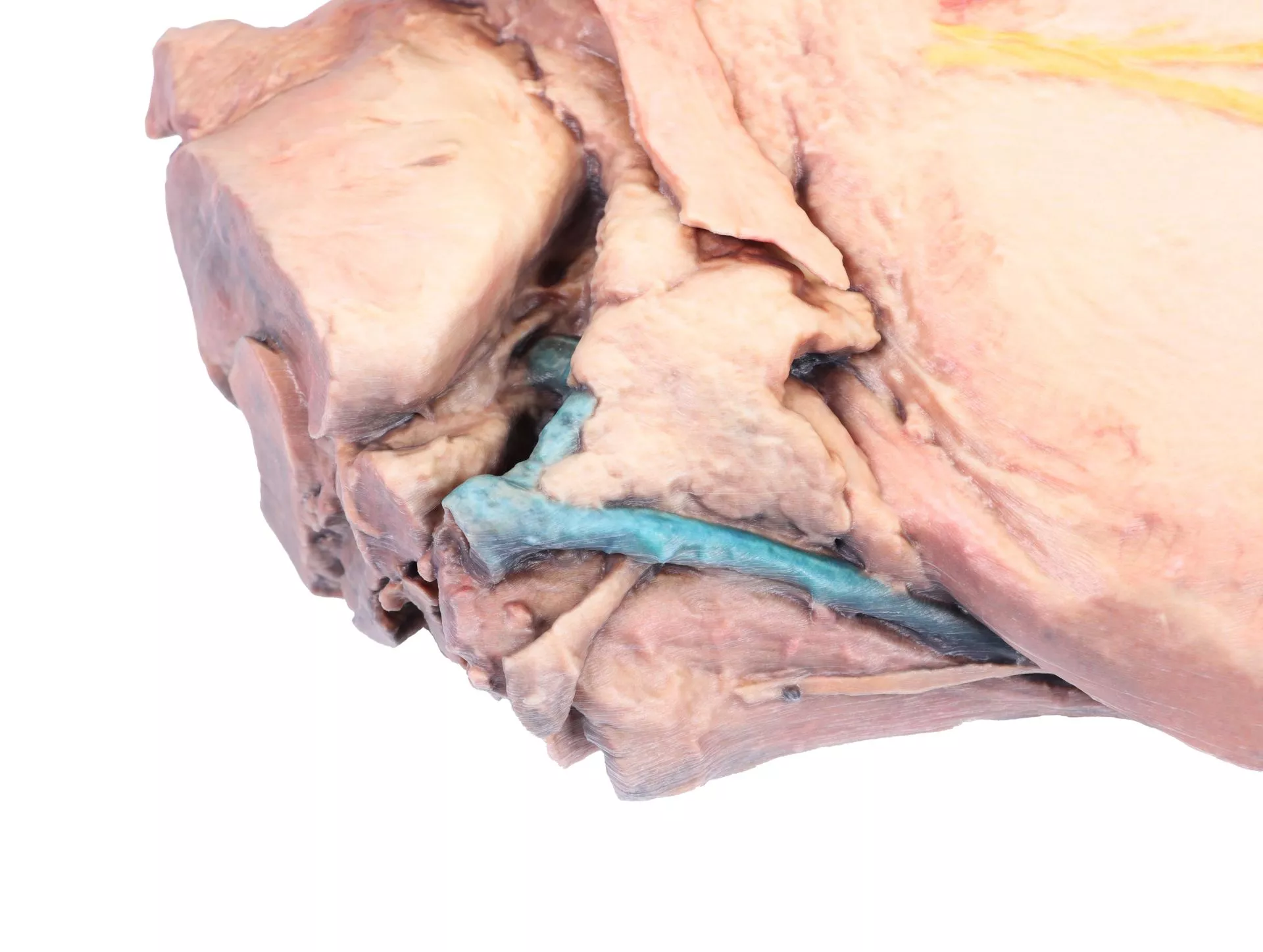
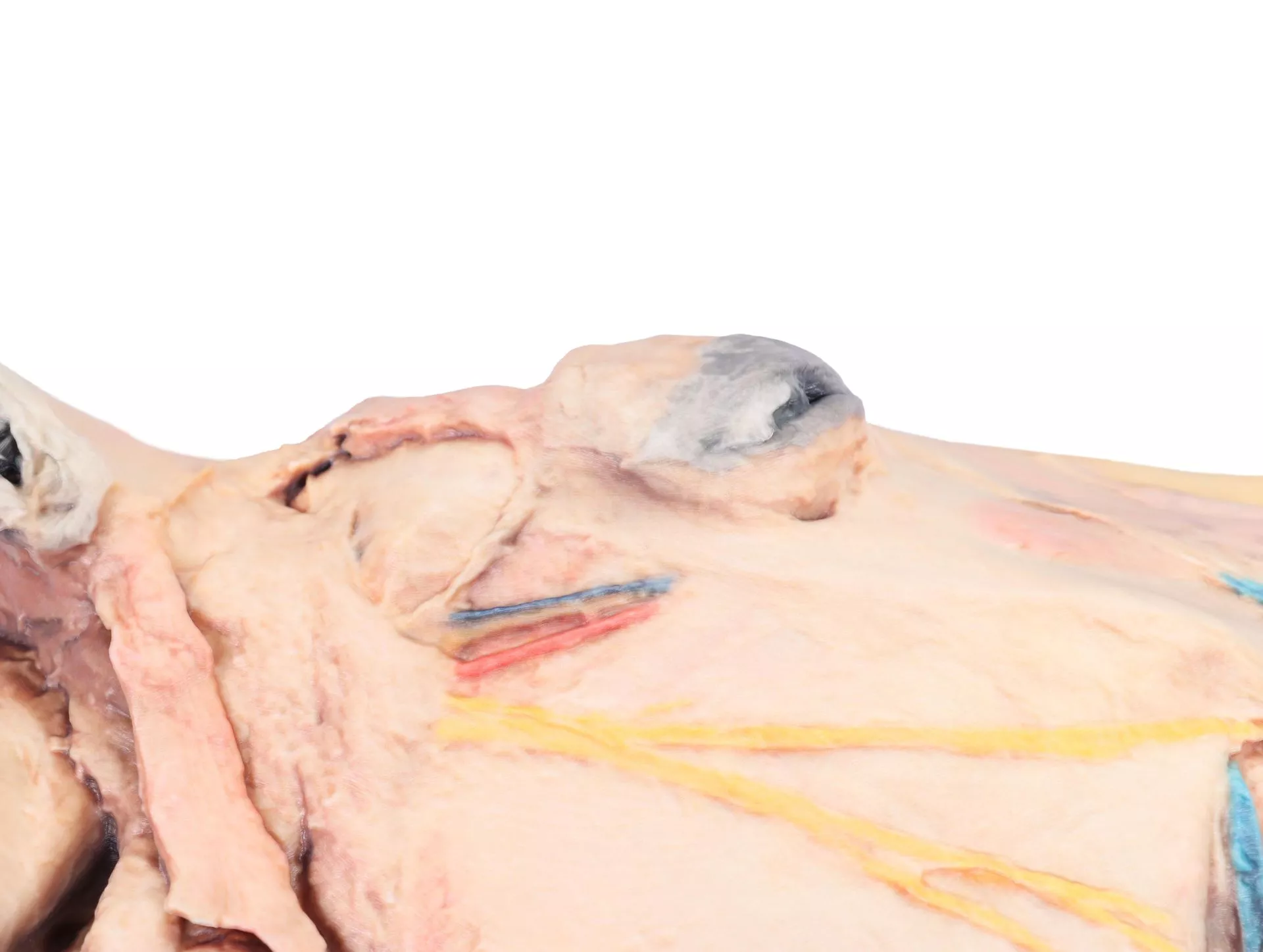
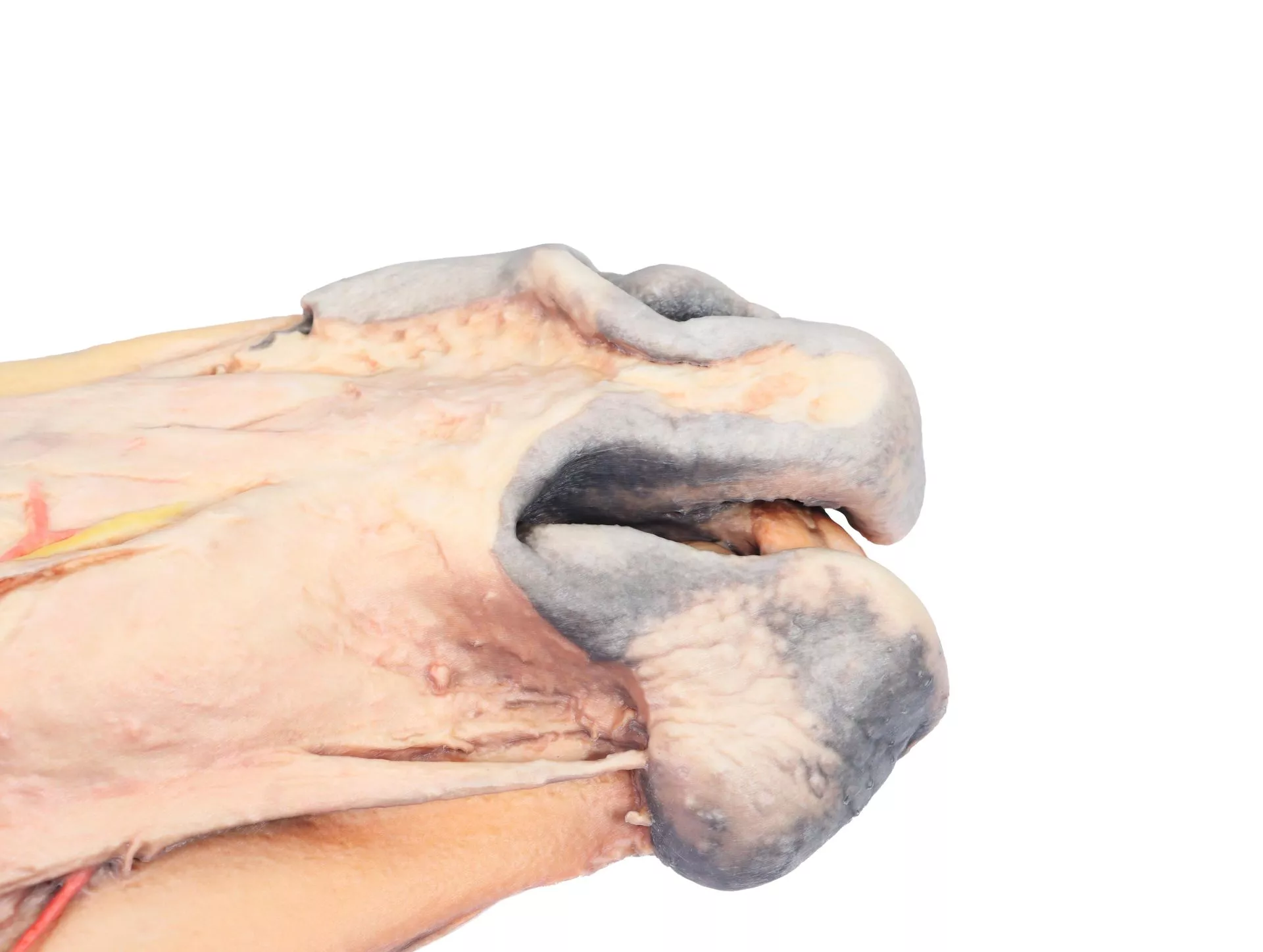
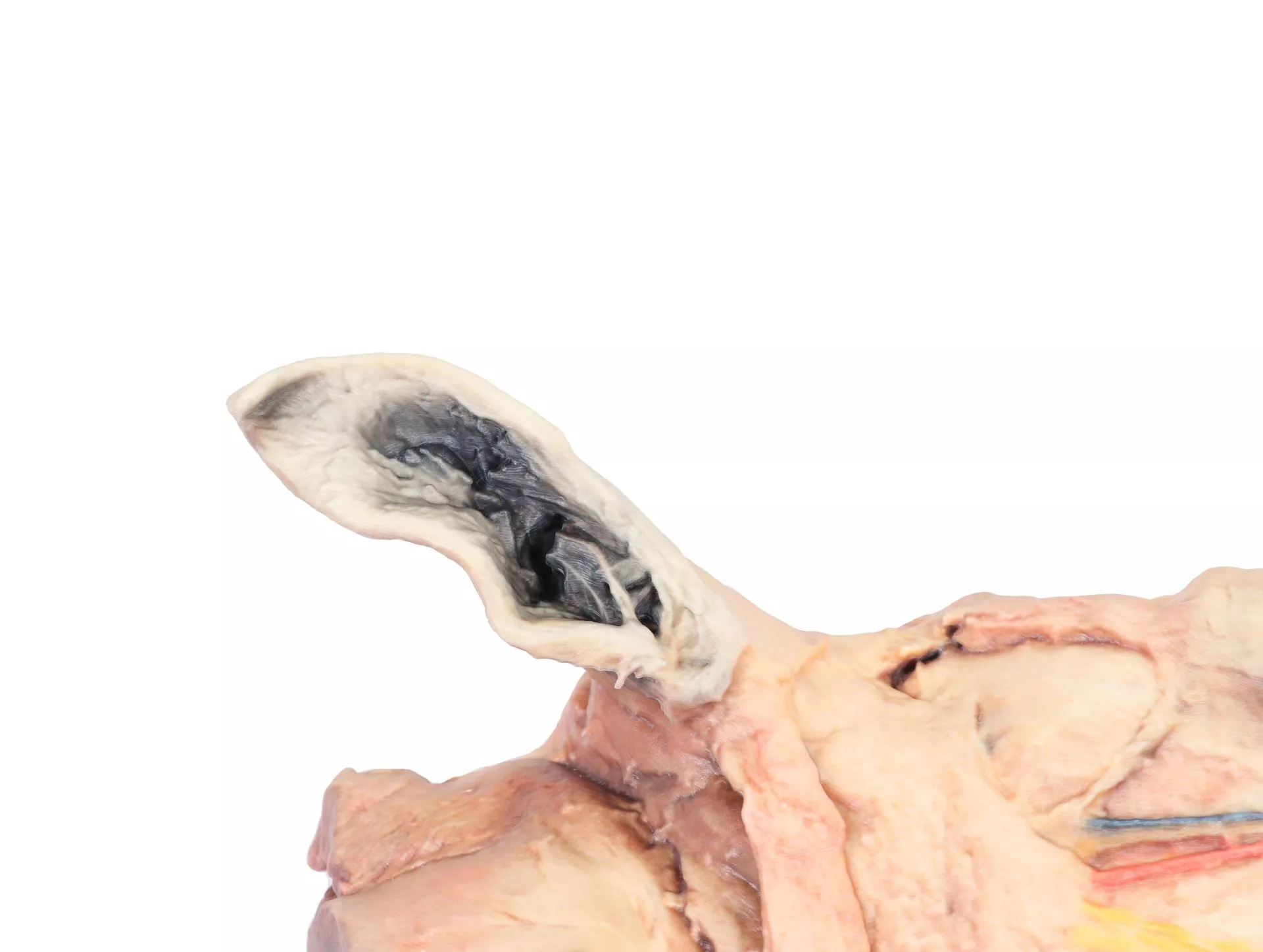
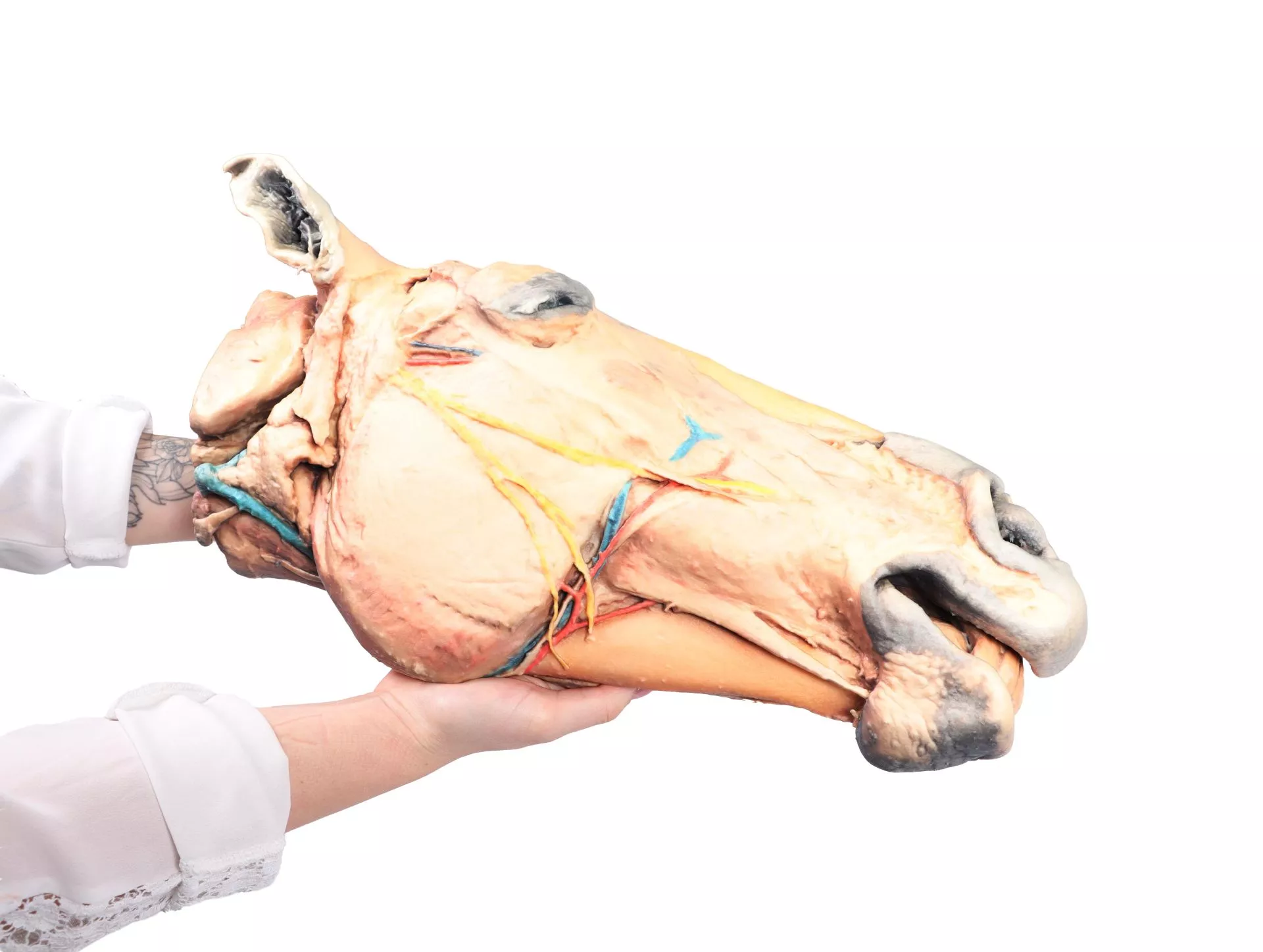
This advanced veterinary model features a superficial dissection of the right lateral side and a middle sagittal section on the medial aspect. On the lateral side, the skin is removed except on the nostrils, lips, and external ear, exposing key facial muscles like the levator nasolabialis, canine, levator labii superioris, zygomaticus, buccinator, and depressor labii inferioris. The masseteric muscle and fascia, facial nerves, facial vessels, parotid structures, and maxillary and linguofacial veins are clearly shown. The medial sagittal section displays the nasal cavity’s conchae, ethmoid bone, cerebral and cerebellar fossae, vomer bone, choanae, and nasopharynx. The oral cavity, hard and soft palate, tongue musculature, oropharynx, laryngeal cartilages, lateral ventricle, vocal fold, infraglottic cavity, and esophagus position are also precisely represented. This model empowers accurate, real-world instruction for veterinary medicine.
Features and Benefits
- Superficial dissection on the right lateral aspect for muscle and nerve visualization
- Middle sagittal section exposes deep anatomical details
- Retains skin on nostrils, lips, and external ear for anatomical reference
- Demonstrates all major facial muscles, glands, arteries, veins, and nerves
- Shows full nasal conchae and meatuses with associated bones
- Highlights cerebral and cerebellar fossae and pharyngeal structures
- Displays laryngeal cartilage, vocal fold, and infraglottic cavity
- Clinical-grade for precise veterinary teaching
- Hand-assembled, education-standard model
Indications for Use
- Veterinary anatomical education and demonstration
- Anatomy curriculum for veterinary students
- Clinical training for equine practitioners
- Reference in anatomical research or lectures
Size Guide
- One size only – life-size equine half-head anatomical model
- Dimensions match actual equine head proportions for realism and scale