Features
Realistic Neonatal Intubation Training for Confident Airway Management
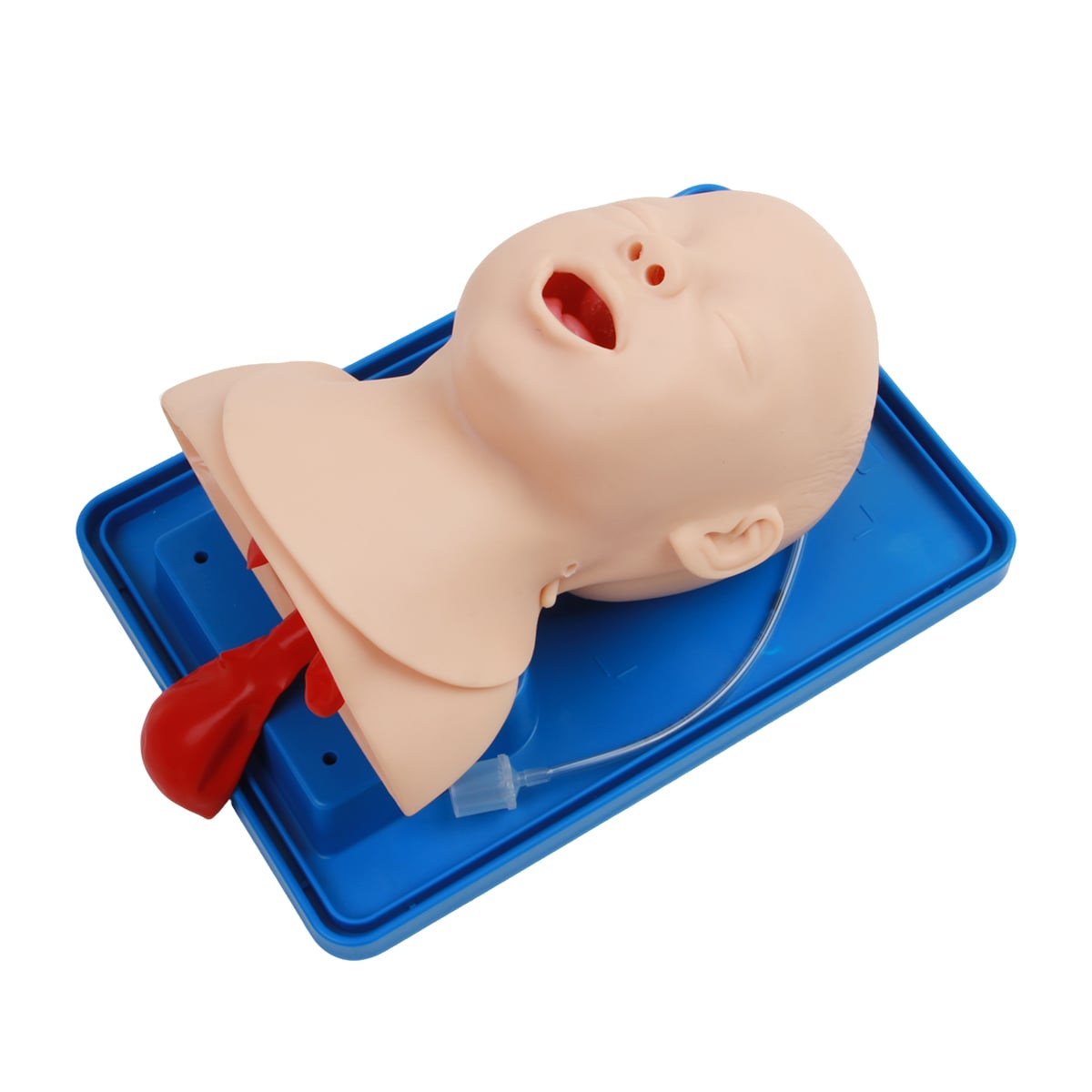
Give students, clinicians, and healthcare educators the tools for success with the Infant Trachea intubation Model. This advanced simulation model replicates the delicate anatomy of an infant’s mouth, throat, and trachea. It allows practitioners to practice essential pediatric airway management procedures in a safe, controlled environment. The durable, high-quality material mimics the tactile feel of real tissue, letting users experience natural resistance and lifelike landmark identification during intubation. With every use, learners build skill, proficiency, and confidence for high-stakes clinical scenarios. The Infant Trachea intubation Model prepares you for rapid and accurate response when airway emergencies arise. Compact and portable, it suits classrooms, skills labs, and medical simulation centers. Wash and reuse the model for repeated, cost-effective training. Equip your team to deliver the highest standard of care in neonatal and pediatric settings.
Features and Benefits
- Lifelike texture and anatomical accuracy replicate real infant tracheal structure
- Allows realistic oral, nasal, and pharyngeal intubation practices
- Supports cross-sectional demonstration of airway structures
- Facilitates verification of tube position and effects
- Tear-resistant, long-lasting medical-grade material
- Reusable and easy to maintain for repeated training sessions
- Portable design enables simple transport and setup
Indications for Use
- Medical student and clinician intubation training
- Skill development for neonatal and pediatric emergency care
- Demonstrations for airway management instruction
- Simulation of oral and nasal intubation techniques
Size Guide
- Model represents average newborn infant airway dimensions
- Length approximately 15 cm
- Width approximately 8 cm
- Height approximately 7 cm